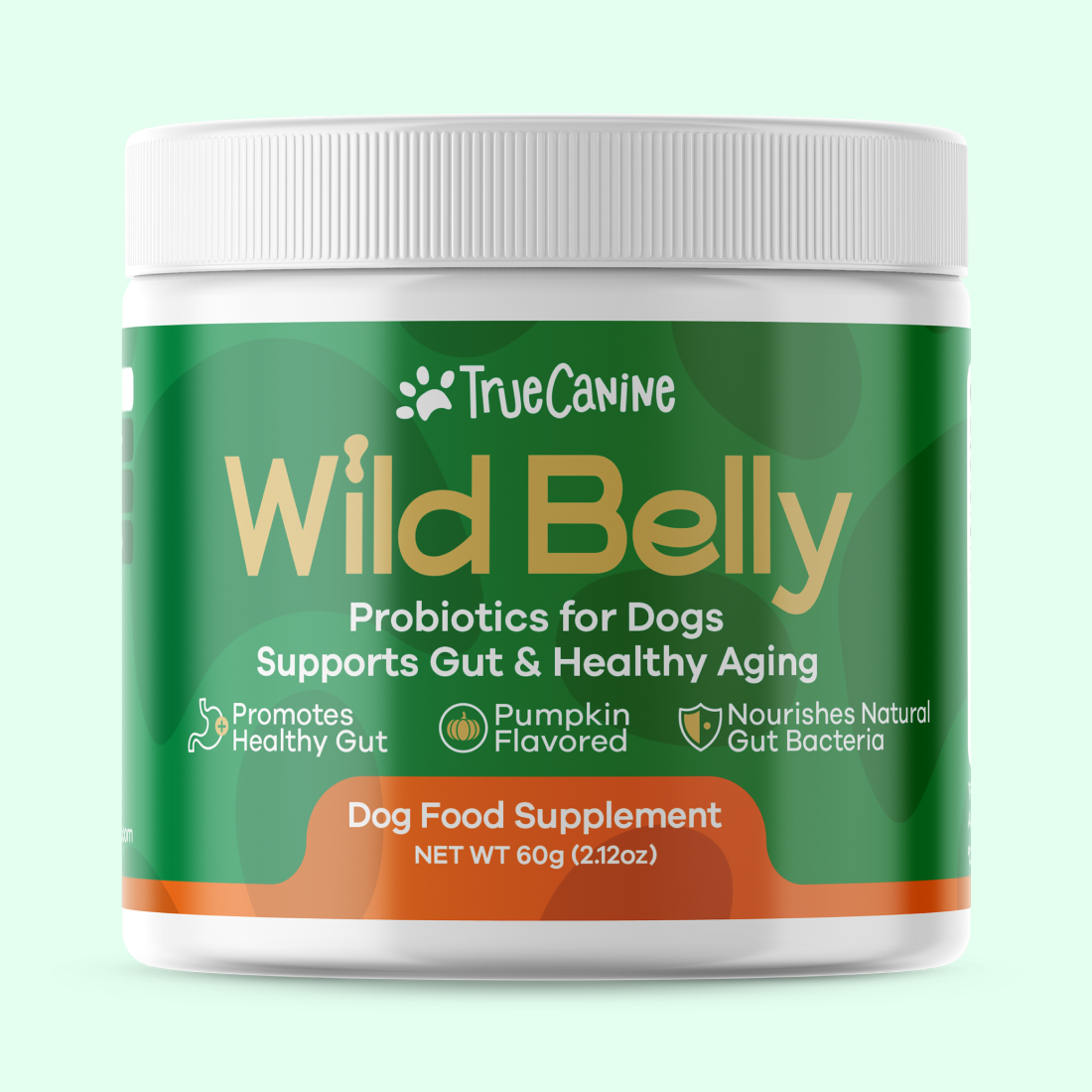
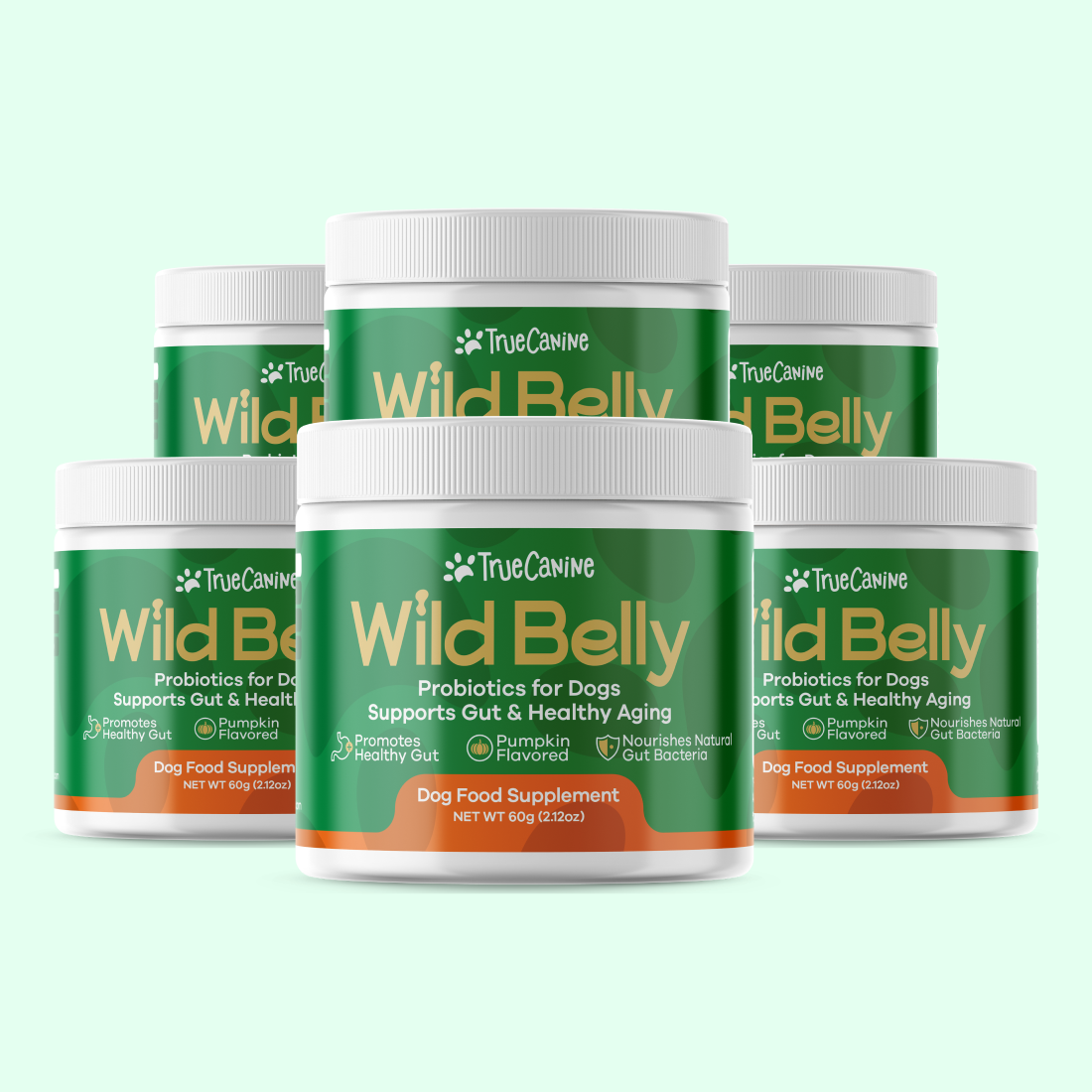
A daily probiotic powder that works where your dog's itching, scratching and tummy troubles actually start — the gut. Sprinkle one scoop on food and let 5 dog-specific probiotic strains plus a gentle prebiotic go to work rebuilding your dog's microbiome from the inside out.
If your dog is up at 3 a.m. chewing their paws, scratching behind their ears raw, or dealing with hot spots that keep coming back, you've probably tried the usual answers: oatmeal shampoos, anti-itch sprays, vet visits, maybe even prescription meds. Those approaches work on the outside — the skin, the ears, the paws. But they do nothing about the place where the trouble often starts: the gut. More than 70% of a dog's immune system lives in the gut, and when the delicate balance of bacteria in there tips the wrong way — something the TrueCanine team says happens to almost every dog by the age of two — it shows up everywhere else: itchy skin, constant licking, yeasty ears, shedding, gassy tummies and loose stools. Wild Belly is built on one central idea: fix the gut, and the rest of the dog starts calming down too.
The formula's deeper story is about a biochemical process called methylation — the system that tells your dog's cells how to behave, how to repair, and how to age. TrueCanine's position is that methylation can start slowing down as early as age two in dogs, and that it depends on a vitamin called folate. The catch: folate is fragile. Heat, light and air destroy it, so the folate sprayed onto commercial kibble is largely gone before the bag is even opened. According to TrueCanine, the reliable way to raise a dog's folate isn't to add more dead vitamins to food — it's to help the gut's own bacteria produce it naturally. That's the job Wild Belly was designed for: repopulate the gut with strains chosen specifically to support this process, including L. Plantarum, described on the official page as the formula's folate-producing strain, alongside research-referenced strains like B. Longum and L. Casei that have been studied in connection with methylation support.
Wild Belly is made by TrueCanine LLC, a US pet-supplement company whose team describes itself as having spent 25+ years in the supplement world, working with veterinarians on pet nutrition. Every jar is produced in the United States in a GMP-certified facility, and the formula is deliberately simple: five dog-specific probiotic strains plus Fibersol — a gentle soluble prebiotic fiber — plus real pumpkin for flavor. The label states it plainly: no fillers, no sugar, no proprietary blend hiding the details. Each jar holds 60 grams of powder (about 30 scoops for an average-size dog), and dosing is refreshingly simple: one scoop sprinkled over your dog's regular food once a day — kibble, wet food, or raw, it doesn't matter. Dogs taste the real pumpkin flavor and think it's a treat; you get a daily gut-health routine with zero pilling, zero chews to hide, and zero battles at the food bowl.
That simplicity reflects the formula's philosophy: one scoop a day, dog-specific strains, nothing else. Generic probiotics are often human formulas repackaged for pets, or single-strain products that were never designed for a dog's digestive tract. Wild Belly's five strains were selected for dogs specifically, the powder format skips the heat and pressure of chew manufacturing that can damage live cultures, and the prebiotic gives the new bacteria something to feed on once they arrive. TrueCanine built Wild Belly for dog owners who are tired of treating symptoms from the outside — and who'd rather support their dog's health from the one place that influences nearly everything else: the gut.
Wild Belly is not a drug and it doesn't mask symptoms. It works nutritionally, in five overlapping ways — each one tied to the strains and ingredients in the formula.
A dog's digestive tract is shorter, more acidic and faster-moving than a human's — which means generic probiotics, often designed for people, may never survive the journey. Wild Belly delivers 8.75 billion CFU per scoop across five strains selected for canine guts: L. Acidophilus, L. Plantarum, B. Longum, L. Casei, and DE-CA9 — a spore-forming Bacillus subtilis that is naturally tough enough to survive stomach acid and reach the intestines alive. Spore probiotics are the armored vehicles of the probiotic world: they stay dormant through harsh conditions and activate where they're needed. By reintroducing these beneficial organisms daily, the formula helps crowd out the yeasts and unfriendly bacteria that thrive when the microbiome is out of balance — the same imbalance linked to the itching, licking, gas and loose stools so many owners see.
Probiotics are only half the equation — beneficial bacteria need food to establish themselves, and that's where prebiotics come in. Wild Belly includes Fibersol, a soluble corn fiber that acts as a gentle prebiotic: it passes through to the colon largely undigested, where the good bacteria ferment it and multiply. Think of it as planting seeds (the probiotics) and watering them (the prebiotic) at the same time. This synbiotic approach — probiotics plus their food in one scoop — is one of the reasons the formula aims to rebuild the microbiome rather than just passing live cultures through. A well-fed colony is a stable colony, and a stable colony is what keeps producing the beneficial compounds — including short-chain fatty acids — that nourish the gut lining and support healthy digestion day after day.
Here's the part most dog probiotics never talk about. Methylation is a core biochemical process — it helps regulate how cells behave, repair themselves and age — and TrueCanine argues it can begin slowing in dogs as early as age two. Methylation depends on folate, but folate is fragile: destroyed by heat, light and air, it's largely gone from processed kibble before your dog ever eats it. The official page's answer is elegant rather than chemical: instead of adding synthetic folate, support the gut bacteria that produce folate naturally. L. Plantarum is positioned as the formula's folate-producing strain, and the page references published research connecting B. Longum and L. Casei to methylation support in dogs. It's a long-game mechanism — the kind of cellular housekeeping that doesn't show up overnight but compounds over months of consistent daily use.
The maddening cycle — scratch, lick, chew, hot spot, vet visit, repeat — often has a gut component that topical treatments can't reach. When the microbiome is imbalanced, yeast and unfriendly organisms can overgrow, and the immune system — over 70% of which resides in the gut — stays on high alert. That over-alert state is what shows up as itchy skin, paw licking, yeasty ears and "allergy paws." Wild Belly approaches this from the inside: L. Acidophilus is included specifically for its role in crowding out yeast, the spore-forming DE-CA9 helps rebalance gut populations, and the prebiotic keeps the beneficial colony thriving. As the gut settles, the immune system has less to react to — which is why owners often report the scratching easing off over the first few weeks, not because anything was suppressed, but because the trigger load went down.
The best supplement in the world does nothing if your dog won't eat it — and anyone who has tried to pill a stubborn terrier knows the struggle. Wild Belly sidesteps the whole battle: it's a powder with real pumpkin flavor that you simply sprinkle over whatever your dog already eats. No forcing pills down throats, no crumbling chews into food only to find them spat out on the rug, no bacon-flavored promises that turn out to be chemical-smelling dust. Pumpkin is a flavor dogs genuinely love, and it's a familiar, gentle food for sensitive stomachs. One scoop, once a day, on any food — kibble, wet, or raw. That frictionless routine is what makes months of consistent use realistic, and consistency is exactly what gut rebalancing requires: this is a daily habit, not a one-time fix, and the formula is designed to be given every single day.
One simple daily scoop covering the main ways an unbalanced gut shows up in dogs — from itchy skin to messy stools.
The headline benefit — and the reason most owners find Wild Belly in the first place. Constant scratching, paw licking, chewing at hot spots and yeasty-smelling ears are often the outside signs of an inside problem: an imbalanced gut keeping the immune system on edge. By reseeding the microbiome with dog-specific strains and feeding them with prebiotic fiber, Wild Belly helps reduce the internal trigger load — so the skin gets a chance to settle. Owners typically judge this over the first 3–6 weeks: less 3 a.m. scratching, fewer raw spots, paws that stay in the dog's mouth less and on the floor more. It's support, not sedation — nothing is being suppressed, the gut is simply being helped back toward balance.
Loose stools, unpredictable digestion and room-clearing gas are classic signs that the gut's bacterial balance is off. When beneficial bacteria are outnumbered, food isn't broken down cleanly — fermentation goes sideways, and the results are messy in every sense. Wild Belly's five strains go to work directly on this: L. Acidophilus and L. Casei help crowd out the organisms behind digestive upset, the spore-forming DE-CA9 supports a healthier gut environment, and the Fibersol prebiotic feeds the whole colony so the improvement sticks. Most owners notice the digestion side of things first — often within the first two to three weeks — because the gut is where the formula lands first. Firmer, more predictable stools and less gas are the everyday proof it's working.
Here's a number worth knowing: over 70% of a dog's immune system lives in the gut. The gut lining is the body's largest immune interface — it's where the body decides, thousands of times a day, what's food and what's foe. When the microbiome is balanced, that decision-making stays calm and accurate; when it's disrupted, the immune system can overreact to harmless things, which is one reason gut imbalance and itchy, reactive skin travel together so often. Wild Belly supports this system at its headquarters: a diverse, well-fed colony of beneficial bacteria helps maintain the gut lining's integrity and keeps immune signaling measured rather than hair-trigger. It's the least visible benefit and arguably the most important one.
Bad breath in dogs isn't always a dental problem — sometimes it's a gut problem wearing a disguise. When digestion is incomplete and unfriendly bacteria overgrow in the intestines, the byproducts travel upward, and the result is breath that clears a room and gas that does the same from the other end. By helping rebalance the gut flora, Wild Belly addresses these issues at their source rather than masking them. The official page specifically lists fresher breath and less gas among the changes owners may notice in the first few weeks. It's one of those benefits that sounds minor until you live with a dog — and then it becomes one of the first things visitors comment on.
A dog's coat is a billboard for what's happening inside. Dull, flaky coats, excessive shedding and that yeasty smell that shampoo never quite fixes are frequently gut-linked: when digestion is poor, the skin — the body's largest organ — doesn't get the nutrients it needs, and when the immune system is overstimulated, the skin is where the irritation surfaces. As Wild Belly helps restore digestive balance, nutrient absorption improves and the immune system's background noise quiets down — and the coat is often where owners see the change. Softer fur, less flaking, reduced shedding and the gradual fading of that persistent yeasty odor are the visible dividends of a gut that's finally working properly. Give it the full first month before judging the mirror.
Dogs age faster than we'd like, and TrueCanine's whole philosophy is that aging well starts at the cellular level. The methylation story — the biochemical process that governs how cells behave and repair, which the company says can slow from around age two — is Wild Belly's long-game pitch: support the gut's natural folate production via L. Plantarum and methylation-linked strains, and you're supporting the machinery of healthy aging itself. This isn't about adding years with certainty — no honest supplement can promise that — it's about giving an older dog's body the microbial support to keep its systems running smoothly. Owners of senior dogs often describe the same cluster of changes: a little more spark on walks, better appetite, a dog that seems more like themselves.
Anyone who has lived with an itchy dog knows the personality cost: the constant scratching, the restless nights, the irritability that comes from never being comfortable in your own skin. Gut discomfort does the same from the inside — a dog with a churned-up stomach is a dog that can't settle. As the itching eases and digestion steadies, many owners report the change they didn't expect: a calmer dog. Less anxious pacing, better sleep through the night, more patience with the kids, more enthusiasm for the things they used to love. The gut-brain connection is real in dogs just as in people, and a comfortable dog is simply a happier member of the family. It's the benefit that doesn't fit on a label — but it's the one owners talk about most.
This one is for the owner, not the dog — and it matters more than it sounds. Probiotic chews get spat out. Pills get hidden in cheese and discovered on the carpet. Liquids get drooled back onto your shirt. Wild Belly is a powder with real pumpkin flavor that disappears into whatever your dog already eats — one scoop, once a day, done in five seconds. No wrestling, no pilling devices, no "did he actually swallow it?" anxiety. Dogs taste pumpkin and think it's a treat; you get a gut-health routine you'll actually maintain. And maintenance is everything here: the microbiome rebuilds over weeks of consistent daily use, so the format that you'll stick with is the format that works. For multi-dog households, it's even simpler — scoop per bowl, no per-dog battles.
Every scoop delivers 8.75 billion CFU across the five strains below, plus Fibersol prebiotic and real pumpkin. No fillers, no sugar, no proprietary blend — the label lists everything.
Lactobacillus acidophilus is the workhorse of the formula — the foundational gut strain. It produces lactic acid, which helps keep the intestinal environment slightly acidic: exactly the conditions beneficial bacteria love and yeasts and unfriendly organisms hate. TrueCanine highlights its role in crowding out yeast overgrowth, one of the drivers behind yeasty ears, yeasty-smelling skin and paw licking. It's also one of the most studied probiotic species in dogs, with a long safety record in canine nutrition. In Wild Belly it sets the baseline: a stable, slightly acidic gut where the other four strains can establish and thrive.
Lactobacillus plantarum is the strain TrueCanine positions at the center of the methylation story: it's described on the official page as the formula's folate-producing strain. Folate is the fragile B-vitamin that methylation depends on — destroyed by heat, light and air, and largely absent from processed kibble — so a gut bacterium that helps produce it naturally is doing a job no kibble topper can. Beyond that role, L. plantarum is a versatile, hardy lactobacillus found in healthy canine guts, known for supporting the gut lining and helping maintain microbial diversity. It's the strain that connects Wild Belly's digestive benefits to its healthy-aging ambitions.
Bifidobacterium longum is one of the cornerstone species of a healthy mammalian gut — bifidobacteria dominate the intestines of healthy young animals and tend to decline with age and stress. TrueCanine references a 2020 Georgetown study in connection with B. longum's role in supporting methylation, tying it into the formula's healthy-aging mechanism. In the gut itself, bifidobacteria are premier fermenters of prebiotic fiber — which makes B. longum the natural partner for the Fibersol prebiotic in the same scoop. Together they form a small production line: fiber in, beneficial short-chain fatty acids out, nourishing the gut lining that stands between your dog's food and their bloodstream.
Lactobacillus casei (listed on the official page as L. Casei) brings both digestive and mechanism credentials. On the digestive side, it's widely used in canine probiotics for supporting comfortable digestion and helping maintain normal stool consistency — the everyday work of a gut strain. On the mechanism side, TrueCanine notes it has been studied since the 1970s at Yale in connection with methylation support in dogs, making it the formula's most research-seasoned ingredient. That dual role — practical digestive support today, methylation support for the long term — is why it earns its place alongside the other four strains rather than being redundant with them.
DE-CA9 is a strain of Bacillus subtilis — and it's the tough one. Unlike lactobacilli, Bacillus subtilis is a spore-forming probiotic: it wraps itself in a protective shell that lets it survive stomach acid, heat and time, then germinates in the intestines where it goes to work. That hardiness is a genuine advantage in a powder that sits in a jar for months. In the gut, B. subtilis supports a balanced microbial environment and healthy digestion, and it's been studied for its role in supporting immune function. Think of DE-CA9 as the formula's insurance policy: while the lactobacilli do the delicate work, the spore strain makes sure a meaningful dose of live beneficial bacteria actually arrives where it's needed, scoop after scoop.
Fibersol is a soluble corn fiber that plays a completely different role from the five strains: it's their food. Prebiotics pass through the upper gut largely undigested and arrive in the colon, where beneficial bacteria ferment them and multiply — producing the short-chain fatty acids that nourish the gut lining. Including the prebiotic in the same scoop is what makes Wild Belly a synbiotic rather than just a probiotic: you're not only introducing good bacteria, you're giving them lunch on arrival. Fibersol is gentle as prebiotics go — soluble, well-tolerated, and unlikely to cause the gassiness that cruder fibers can trigger — which matters in a product whose whole point is calmer digestion.
The ingredient dogs actually taste. Real pumpkin gives Wild Belly its flavor — the reason picky eaters who reject pills and spit out chews will still lick the bowl clean. But pumpkin isn't just a bribe: it's a familiar, gentle food for dogs, traditionally used to support comfortable digestion, and it fits the formula's clean-label promise. The official page is explicit about the whole list: these seven ingredients are the entire formula — no fillers, no sugar, no artificial flavors, no proprietary blend. When a company tells you exactly what's in the jar and exactly what isn't, that's the transparency to look for — and it's why the label can be this short.
Total potency: 8.75 billion CFU per scoop. Per-strain CFU amounts are not published by the manufacturer — only the total is stated, and this page doesn't guess at the split. Other ingredients: none — no fillers, no sugar, no artificial flavors or colors. If your dog is on medication or has a diagnosed condition, check with your veterinarian before starting any supplement.
Wild Belly was designed for dogs whose guts are quietly causing trouble elsewhere — and for owners tired of treating symptoms from the outside. You may recognise your dog in one of these groups:
Paw licking, ear scratching, hot spots, yeasty smell that won't quit — if your dog's skin is the complaint, the gut is worth investigating. Wild Belly is built for exactly this dog: rebalancing the microbiome to lower the internal trigger load behind reactive skin.
Loose stools, unpredictable digestion, gas that empties rooms, a tummy that objects to every food change. Five dog-specific strains plus prebiotic fiber go directly at the digestive imbalance behind these symptoms.
Older dogs often show the compound interest of years of gut wear: duller coats, lower energy, more digestive drama. The methylation-support angle and daily microbial rebalancing make Wild Belly a sensible long-term routine for aging dogs.
If pilling is a wrestling match and chews get spat out, a pumpkin-flavored powder that vanishes into food changes everything. One scoop per bowl, once a day — no per-dog battles, no "did he swallow it" detective work.
An honest boundary: Wild Belly is a nutritional powder, not a drug and not a diagnosis. If your dog has chronic diarrhea, vomiting, sudden behavior changes, open sores, or any symptom that worries you, see your veterinarian first — gut support complements veterinary care, it never replaces it. Puppies, pregnant/nursing dogs, and dogs on medication (especially immune-suppressing drugs) should only start a probiotic on a vet's advice.
Gut rebalancing works on biology's timetable, not a stopwatch. Every dog is different — this is a realistic map of the first two months, the full length of the guarantee.
The first week is about the routine, not results: one scoop on food, once a day, every day. The new bacteria are arriving; the old imbalance isn't surrendering overnight. Some dogs go through a brief adjustment — slightly softer stools or a gurgly tummy for a day or two — as the microbiome shifts. That's normal and usually passes quickly. What you should see immediately: your dog eating it without a fight, thanks to the pumpkin flavor. If your dog is extremely sensitive, start with half a scoop for a few days and work up.
The gut is where the formula lands first, so digestion is usually where change shows up first. By week two, many owners notice stools becoming more predictable and formed, and the worst of the gas easing off. The prebiotic is feeding the new colony by now, and the strains are establishing. The itching may not have changed much yet — skin lags behind the gut, because the immune system needs time to stand down. Don't judge the skin at week two; judge the poop. If digestion is steadier, the foundation is being built.
Three weeks is the window the official page points to for the first cluster of visible changes: firmer stools, less gas, fresher breath — and for many dogs, the beginning of calmer skin. The scratching often eases in stages rather than switching off: fewer midnight scratching sessions, less frantic paw chewing, hot spots starting to look less angry. This is also when the "is it working?" doubt usually peaks for the dogs who are slower to respond. Stay the course — the microbiome is still rebuilding, and the dogs that take five or six weeks are not failing, they're just on a slower curve.
For an average-size dog (20–75 lbs), day 30 is the bottom of the first jar — a natural moment to assess honestly. Compare like with like: the paw-licking frequency, the ear smell, the coat texture, the energy on walks, the quality of the stools. Take a photo on day one if you haven't — memory is unreliable and the gradual changes are easy to miss day to day. If things are clearly better, you're seeing what a rebalanced gut does. If they're only marginally better, remember that skin and coat are the last to reflect internal change; the second month is where the compounding happens.
By six weeks, the colony is established and the prebiotic has been feeding it for over a month. This is typically when owners report the changes that surprised them: the dog sleeping through the night instead of scratching, the yeasty ear smell gone, the coat noticeably softer, a senior dog with more bounce on the morning walk. The methylation-support mechanism — the slow cellular housekeeping behind the formula's healthy-aging claims — has had six weeks of daily support. If you started skeptical, day 45 is usually when skepticism either converts or confirms itself.
Sixty days is the complete trial the guarantee allows — and it's a fair one. Two full months is enough for even slow-responding dogs to show what gut rebalancing can do. If your dog is scratching less, digesting better and generally more comfortable, you've got your answer and the multi-jar packages make the routine economical. If you're not satisfied, contact TrueCanine's support at customercare@gettruecanine.com within the guarantee window — the sales page promises a refund even if the jar is empty. Note the fine print: the formal refund policy covers first purchases and asks for unopened bottles back on multi-jar orders, so read the current terms before you claim.
Most people weighing up Wild Belly are really choosing between four paths. Here is an honest look at what each one does — and doesn't — do.
A daily nutritional approach built for canine guts specifically. One pumpkin-flavored scoop delivers 8.75 billion CFU across 5 dog-specific strains plus a prebiotic — no pills, no chews, no battles. It addresses the gut imbalance behind itchy skin and messy digestion from the inside, rather than masking symptoms from the outside. From $29.99 a jar on the multi-jar packages, and covered by a 60-day money-back guarantee.
Convenient and dog-approved in theory — but chews are manufactured with heat and pressure that can damage live cultures before the bag is even opened, and many contain only one or two generic strains. They're also the format picky dogs are most likely to reject or spit out. Fine as an occasional top-up, but a weaker delivery system than a powder for a daily rebuilding routine — and usually more expensive per CFU.
Plain yogurt, pumpkin purée and similar home remedies are gentle and cheap, and plain pumpkin for digestion is genuinely useful. But grocery yogurt contains human-targeted strains at food-level doses — nowhere near 8.75 billion CFU of dog-specific organisms — plus lactose that many dogs don't tolerate well. Home remedies are fine supportive care; they're not a rebalancing protocol.
The simplest option, and for a while it feels free. But the forces acting on your dog's gut — processed food, stress, antibiotics, age — don't pause, and the itch-scratch cycle tends to escalate, not resolve: more vet visits, more shampoos, more midnight scratching. Supporting the gut early, while the imbalance is still manageable, is the one option that gets cheaper the sooner you start.
Order through the official TrueCanine store to qualify for the guarantee. Every package is covered for 60 days.
⚠ High demand — this discounted pricing is not guaranteed to last.
Try Wild Belly for a full 60 days. If your dog isn't scratching less, digesting better and generally more comfortable — simply contact TrueCanine's support team, and you'll receive a full, no-questions-asked refund of your purchase price. The sales page promises the guarantee holds even if the jar is empty.
Here is exactly how it works. Your 60 days start on the day you place your order. Use the powder daily — one scoop on food, every day — and give the formula a fair trial. If at any point in those 60 days you decide Wild Belly is not for your dog, email customercare@gettruecanine.com and request your refund. One honest note: the company's formal refund policy is stricter than the sales-page promise — it covers first-time purchases, asks for unopened bottles to be returned on multi-jar orders, and doesn't refund shipping — so read the current policy on truecanine.com before you order, and keep your order confirmation email.
TRY WILD BELLY RISK-FREE FOR 60 DAYS →One scoop sprinkled over your dog's regular food, once a day — kibble, wet food or raw, it all works. A jar holds 60g (about 30 scoops): for dogs under 20 lbs that's roughly a 60-day supply, for 20–75 lbs about 30 days, and for dogs over 75 lbs about 15 days. If your dog is very sensitive, start with half a scoop for a few days and work up to the full scoop.
Digestion usually responds first — many owners notice firmer stools and less gas within 2–3 weeks. Skin and coat changes lag behind because the immune system needs time to calm down; judge itching and scratching over 3–6 weeks of daily use. Every dog is different, and slow responders aren't failing — they're just on a longer curve. The 60-day guarantee exists precisely so you can run a full, fair trial.
Two reasons. First, chews are made with heat and pressure that can damage live cultures before the bag is opened — a powder skips that manufacturing stress. Second, compliance: pills get hidden in cheese and found on the carpet, chews get spat out, but a pumpkin-flavored powder disappears into food. The format you'll actually use every day is the format that works.
Yes — plain pumpkin is one of the most dog-friendly foods there is, traditionally used to support comfortable digestion. In Wild Belly it's real pumpkin used as the flavor, which is why even picky eaters tend to lick the bowl clean. There are no artificial flavors — what your dog tastes is actual pumpkin.
Wild Belly is made in the USA in a GMP-certified facility with no fillers, no sugar and no artificial additives, and its probiotic species are well-established in canine nutrition. Most dogs tolerate it easily; a brief adjustment period (slightly softer stools for a day or two) is the most commonly reported effect when starting. If your dog is on medication, has a diagnosed condition, is a puppy, or is pregnant/nursing, check with your veterinarian first.
The formula is positioned for dogs of all ages, but puppies have developing immune and digestive systems — ask your vet before starting any supplement in a puppy under 12 weeks old, and follow the weight-based scoop guidance (under 20 lbs) for small pups your vet approves.
Each dog needs their own daily scoop, so multi-dog households go through jars faster — that's exactly what the 3- and 6-jar packages are priced for ($32.99 and $29.99 per jar respectively). Dosing is per dog by weight: a small dog under 20 lbs uses roughly half the powder of a 50-lb dog per month.
Probiotics are often used alongside veterinary treatment — including after antibiotics, which can disrupt the gut flora — but timing and suitability depend on the drug and the condition. Always check with your veterinarian before combining any supplement with prescription medication, especially immune-suppressing drugs.
Through the official TrueCanine store at truecanine.com — that's the only place covered by the 60-day guarantee. It's not sold in pet stores, and jars appearing on marketplaces are offered by third-party sellers and aren't covered by the guarantee, so the official store is the safe place to buy.
You'll go to the official TrueCanine store to choose your package (1, 3 or 6 jars, one-time or subscribe-and-save) and check out securely. It's a one-time payment unless you actively choose the subscription option — there is no forced auto-ship.
No — unless you choose it. One-time orders are exactly that: one payment, no rebills. TrueCanine also offers an optional Subscribe & Save (about 10% off, cancel or pause anytime), but it's opt-in, never the default. What you see at checkout is what you pay.
Orders ship from within the United States, and US delivery typically takes around 5–7 business days. Shipping is free on US orders over $100 (the 6-jar package qualifies). You'll receive tracking details by email once your order leaves the fulfilment centre — confirm current timing at checkout.
TrueCanine sells Wild Belly only through its official store. That keeps the price lower (no retail mark-up), helps ensure fresh stock with live cultures, and — importantly — means every order is covered by the 60-day money-back guarantee. Marketplace listings come from third-party sellers and aren't covered, so buy direct.
Good catch — and an honest answer: some older review pages describe a bacon-flavored, bottle-format version sold through different channels. The current official product on truecanine.com is the pumpkin-flavored powder in jars described on this page, with the pricing and 60-day guarantee shown here. This page reflects the current official version as of October 2026; older third-party pages may be out of date.
No — and any supplement that claimed otherwise wouldn't be worth trusting. Wild Belly is nutritional gut support; it doesn't diagnose or treat disease. Keep your regular vet check-ups, follow your vet's treatment plan for diagnosed conditions, and seek prompt veterinary care for sudden symptoms like vomiting, bloody stools, open sores or breathing difficulty.
Order through the official store, use the powder daily for up to 60 days, and if you're not satisfied, email customercare@gettruecanine.com to request a refund — the sales page says it applies even if the jar is empty. Read the current refund policy on truecanine.com first: it covers first-time purchases, requires unopened bottles to be returned on multi-jar orders, and shipping charges aren't refunded. Keep your order confirmation email.
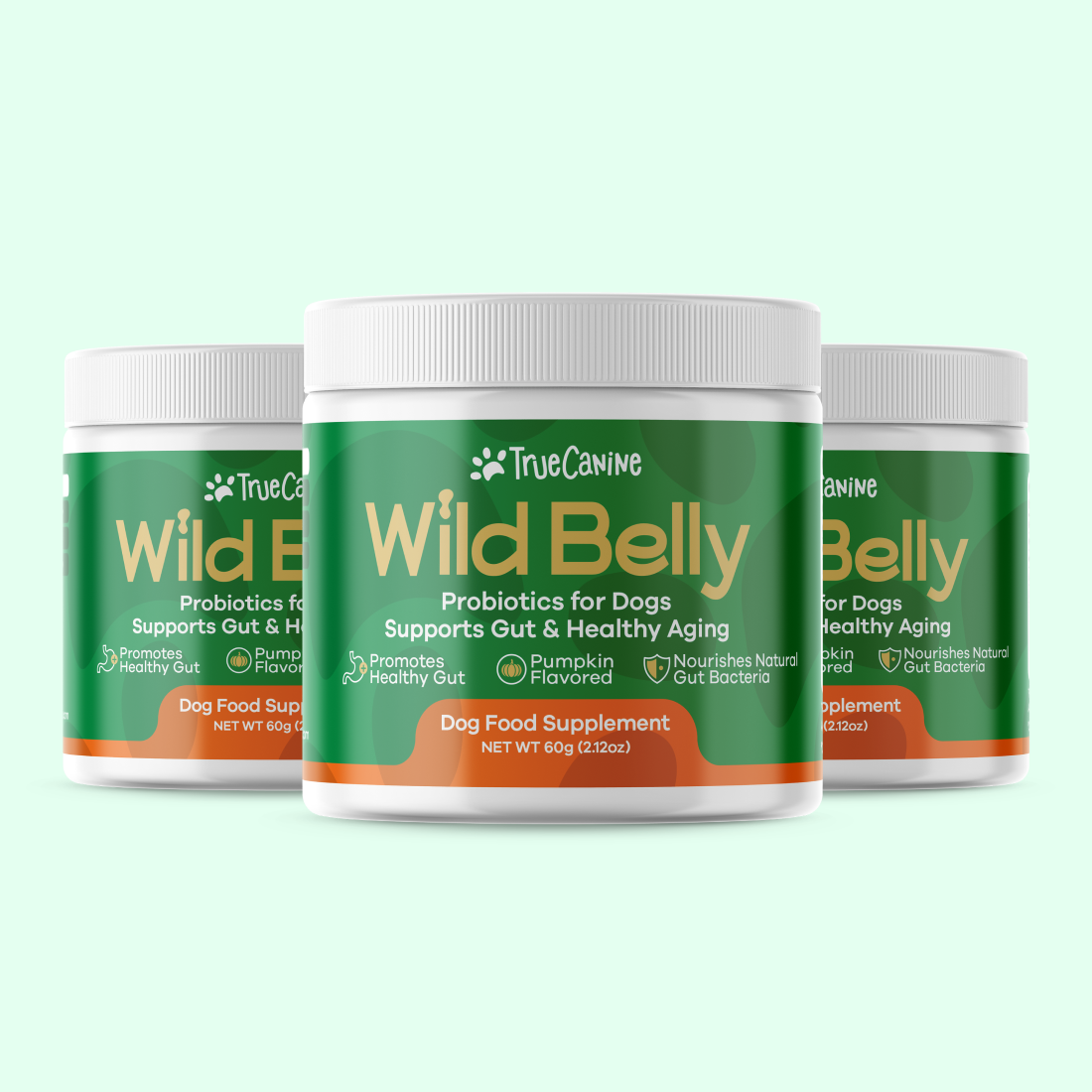
Support your dog's gut with 5 dog-specific probiotic strains for as little as $29.99 a jar, backed by a 60-day money-back guarantee.
GET YOUR DISCOUNT NOW →